Showing posts with label Political Philosophy. Show all posts

Thursday, December 3, 2015

The Open Society and Its Frenemies: Karl Popper's Defense of Science and Liberalism for the Twenty-First Century


In 1919 a total eclipse of the sun provided a rare opportunity to test 
Einstein’s theory of general relativity. Arthur Eddington, a British 
astronomer and admirer of Einstein who had resisted  the  nationalist 
hatreds of the First World War, sent two teams to the mid-
Atlantic to observe Mercury during the eclipse, and test the German scientist’s theory. To the astonishment of his colleagues, and the world, Einstein was vindicated. Two centuries of orthodoxy in physics were disrupted over-night, and Einstein was catapulted into a celebrity which has never left him.
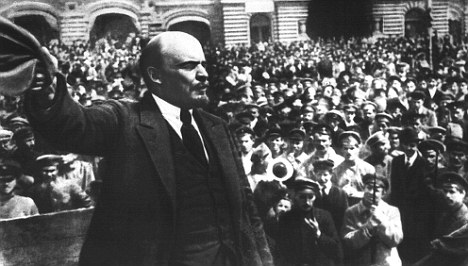
At that time much of Europe was in chaos. The Austrian and Russian Empires had collapsed under the strain of the First World War, and Marxist revolutionaries rushed to fill the void. They called for socialism in stirring public speeches, raised militias, staged coups and counter-coups, and fought their nationalist enemies in the streets and on the battlefield. Amidst this struggle all eyes turned to the Soviet Union, whose confident leader, Lenin, preached the dawn of a new era of happiness and progress. He was certain that Karl Marx had discovered a science of history, and that it was at last possible for humankind to seize control of their destiny, completely transform society – even to predict the future.
Karl Popper, soon to be one of the most famous philosophers of the twentieth-century, was a student in Vienna during these troubled but exhilarating times. He had been mightily impressed by Einstein and Marx. Both could muster impressive arguments, presented themselves as authentically scientific, and proposed revolutionary new ways of looking at the world. But the more he thought about it, the more dissatisfied he became with Marx, and the more he admired Einstein. In The Logic of Scientific Discovery (1934), he argued that the difference between authentic science and pseudo-science was falsifiability. Einstein had put his theory to the test. He had made definite predictions, and if they had proven incorrect, that would have been evidence against his theory. While no theory can be completely proven or disproven on the basis of just a handful of observations, prediction was a crucial test. Anyone could make claims, but prediction forced the issue in an unambiguous way. So, Popper concluded, the more predictions a theory makes, and the more risky they are, the more genuinely scientific it is. The more Einstein’s theory was tested, the better it looked.
Marx, too, had made predictions. He had predicted that the revolution would occur first in Germany, since it was the most heavily-industrialized; he had predicted that depressions would become more and more severe over time as the capitalists failed to find buyers for their over-produced goods; and he had predicted that the workers would become more and more miserable as the owners slashed their wages in an attempt to make up the shortfall. None of these predictions had been borne-out, yet Marxists were more numerous, more deeply-convinced, and more powerful than ever. What was happening?
The key, Popper believed, was the word “science,” for it carried then, as it does now, tremendous prestige. To speak it is to invoke the awesome technological progress of the last few centuries, the principled stand of Galileo, the towering genius of Newton and Darwin, and, in short, our highest aspirations to truth and reason. But as astute observers recognize its deep emotional resonance, they will try to claim it for all sorts of purposes – politics, ethics, ideology, beliefs about the meaning of life and our place in the cosmos, and an entire philosophy of life, can all be called science. While there is no reason, in principle, that these views cannot be scientific, they usually do not make the type of predictions that characterized Einstein’s physics. Yet people who feel they have something important to say are naturally tempted to call their ideas scientific, hoping that some of the prestige of Newton, Darwin, or Einstein will rub off. In the never ending war of ideas, invoking the symbolism of science can provide a powerful advantage.
Einstein took a risk. So, too, did Marx. According to Popper they were both scientific in that sense – but Einstein passed the test of prediction, where Marx did not. So to continue to hold to Marxism after its predictions had failed was not scientific, but ideological, and this was the reason that no amount of evidence or argument could shake a convinced Marxist. In order to protect science from ideological abuse, Popper argued, we need to keep this distinction in mind. Genuine science takes risks, and its products could be disproven. Ideology, by contrast, risks nothing, and is never wrong.
Popper published these views under the shadow of a National Socialist takeover of Austria. He fled his country shortly after he published, and ended up in New Zealand for most of the Second World War, where he wrote a classic defense of liberalism called The Open Society and Its Enemies (1945). He argued that the Open Society – the liberal, tolerant society which permits dissent, and is based on democratic institutions and values – has always faced opposition from within, even from intellectuals. Because it leaves questions of meaning and identity to the individual, rather than to the group, it also leaves the individual to fend for themselves when it comes to the most important questions they can ask about life. No one can tell us what to believe about ethics, politics, religion, science, the meaning of life, or any of the other profoundly important questions we seek answers to. We have to decide for ourselves, on the basis of reason and evidence, and that is not only a freedom, but a responsibility.
There have always been people who find that responsibility a burden, and who wanted to rid themselves of it. Others have been only too happy to take it away. Provided that the appropriate symbols were invoked, through gestures, phrases, and rituals, these people can get along nicely. In that sense it hardly matters what the phrases and gestures actually are, or where they come from. They could be the symbols of nationalism or universalism, hope for the future or veneration of the past, of religion or science, or indeed anything else. What matters is not the symbol, but the actions that follow from it, and in that sense the end result of this irresponsibility is always the same – the demand for a Closed Society, where all the answers are already known, where dissent is not permitted, and there is no greater crime than disloyalty to the group.
In Popper’s time the enemies of the Open Society were Communists and Fascists, who, however much they hated each other, agreed in their rejection of democracy. But he stressed that this was not a one-time affair. The Open Society always had enemies, and always would. In the time of the Greeks those enemies were the Platonists. They demanded the rule of an all-knowing philosopher king, whose knowledge of the invisible Forms and Essences would lift him high above the people, and whose Guardians would ruthlessly punish dissent, in order to create a utopia. In the time of the Enlightenment those enemies were the Hegelians. They rejected democracy in favor of monarchism, smothered rational inquiry beneath the fog of romanticism, and dreamed of a return to the Middle Ages. In our own time Christian, Jewish, and Islamic fundamentalists similarly reject the Open Society. Christian fundamentalists want Six-Day Creationism taught in the public schools instead of genuine science, they reject the right of gay people to adopt or marry, and are promising to build a huge and ridiculous wall on the Mexican border to keep immigrants out. Jewish Fundamentalists claim that Palestine is their holy land, promised to them by God, and gather in the streets of their cities shouting “Death to the Arabs!” while their tanks and fighter jets make their wishes a reality. And as we all know, Islamic Fundamentalists have launched dozens of attacks in their own countries and in ours – in New York, Paris, Mumbai, Beirut, Cairo, and many other places, have cruelly tortured prisoners, and terrified millions of people across the world. When asked about their goals, they say they want to destroy the mutual understanding that makes it possible for Muslims and other communities to live in peace - a strategy that is likely to succeed if we do not defend our values as well as our lives from their terror campaign.
While all the world’s attention is focused on religious Fundamentalism, there is a new tribalism, and a new revolt against reason, taking shape within liberalism. The name of this movement is New Atheism, but it would be more appropriate to call it Atheist Fundamentalism. Like their religious counterparts, these people believe they are members of a select and blessed minority – a Chosen People – and that they possess an infallible truth, called Science. Science, they say, can answer every question simply and convincingly, whether it’s about ethics, politics, the existence of God, the meaning of life, or our place in the cosmos. There are no genuine philosophical problems, no real moral dilemmas, no mysteries, and indeed not much reason to have these discussions at all. Science has spoken – your job, if you are truly rational, is to submit, and the proof of your rationality is your submission. They are terrified of much the same prospect as their Christian, Jewish, and Islamic Fundamentalist counterparts – of sharing space with people whose ideas they detest.
Atheist Fundamentalists talk about science quite a bit, but it seems to me that Popper, who understood only too-well how much was at stake in our use of that word, would have rejected them as narrow-minded ideologues. What bold, falsifiable predictions have they made? What are they really risking when they reclassify their political and philosophical opinions as science? Do their arguments really show the spirit of critical inquiry that they are always praising? Are their views genuinely scientific, or are they simply appeals to prejudice? Do they want more freedom, or less? Can they honestly claim to represent the values of science, or the Open Society?
To me science means, above all, a spirit of open-ended, critical inquiry. It means appeals to evidence rather than to prejudice, and to reason rather than to fear. To me liberalism means the plurality of a free society welded together by humanism, and that we should value and respect all human life, simply because it is human. It means that we hold people accountable for what they do, not for who they are or what they believe. When I read people argue, on the basis of science and liberalism, that we have no right to think matters through for ourselves, or that we should hate, fear, and despise people who do not share our opinions, I have to wonder what they think the words “science” and “liberalism” mean.
Fundamentalist Atheists aren’t the kind of allies we need in the struggle for reason and tolerance, for reasons Karl Popper saw only too well. Like that friend who you used to have good times with, but these days only bring you down, they aren't actually friends at all. They’re frenemies, and it’s time to cut them loose.

Wednesday, November 4, 2015

The Collapse of Civilization in Europe: 1914 - 1945

If you want a picture of the future, imagine a boot stamping on a human face—forever. –George Orwell
There may be times when we are powerless to prevent injustice, but there must never be a time when we fail to protest. –Elie Wiesel
The principle aim of intellectual history is to show how ideas have developed over time, and how they both arise out of, and actively shape, that development. Ideas are not mere superstructure, as Karl Marx supposed; they influence people, often profoundly, and that too is a part of history. We saw earlier how the histories of Vico, Voltaire, Gibbon, and Condorcet arose out of the Enlightenment, and how they contributed to the ideology of the French Revolution. We also saw how that legacy generated new kinds of historical thought: Liberalism in Tocqueville and Conservatism in Burckhardt; Historicism in Ranke and Hegel; Romanticism in Michelet and Nietzsche, and Positivism in Marx. As our story moves into the twentieth century, we are again compelled to discuss a tremendous political and social upheaval, for the years 1914–1945 saw a series of disasters such as the world had never known, and that very nearly ended civilization in Europe.
The crisis began in 1914, with the First World War, which emerged out of circumstances too complex to be addressed even cursorily here. In the barest possible terms, the war was a consequence of German unification in 1871, which made Germany the strongest power, by far, in Europe. This imbalance tempted German leaders to aim at European hegemony, and compelled France and Russia to ally against it out of mutual fear. Austrian rivalry with Russia in the Balkans drove it to seek alliance with Germany, while Britain and the Ottoman Empire, both of which tried hard to remain neutral, were compelled to choose opposite sides in the early months of the war. The United States joined much later, and only reluctantly. As all the world knows, the war was touched off by, (in Otto von Bismarck’s memorable phrase) “some damn fool thing in the Balkans,” which, for reasons which can never quite be satisfactorily explained, compelled Germany to invade France a few months later.
Philosophy of History
Political Philosophy

Karl Marx's Historical Materialism


"The philosophers have only interpreted the world in various ways; the point, however, is to change it."

Karl Marx (1818–1883) was a German philosopher and sociologist whose scientific approach to history, combined with his revolutionary socialism, has made him one of the most influential, famous, and indeed infamous, intellectuals who ever lived.

His major works were The Communist Manifesto (1848) and Capital (1867). The first was written during the Revolutions of 1848, and aimed to explain the political program of the Communist Party to a popular audience. The second was much more serious. Socialists had long believed they had both morality and science on their side, but Marx seemed to prove it, for his critique of capitalism was situated within a theory that explained the entire human past, and also predicted the future. In other words, it was a genuine science of history, just as Newton had established for physics and Darwin for biology.

Continued...

https://www.partiallyexaminedlife.com/2015/10/08/philosophy-of-history-part-xiii-karl-marxs-historical-materialism/

Part of a Series on Philosophy of History
Part of a Series on Political Philosophy

Jakob Burckhardt: Civilization, Art, and Power Politics


"I know too much of history to expect anything from the despotism of the masses but a future tyranny, which will be the end of history." –Jacob Burckhardt

Jacob Burckhardt (1818–1897) is the historian who, more than any other, is responsible for the concept of the Renaissance as a distinct historical epoch. Other historians had written about fifteenth- and sixteenth-century Italy, to be sure, but Burckhardt was the first to see the period as a unit, characterized not by the “rebirth” of antiquity, as Petrarch thought, but by the invention of something entirely new—modernity, which meant the birth of the individual and of the modern bureaucratic state.

He was born into one of the oldest and proudest families of Basel, which, with a few other families, ruled the city as a closed oligarchy until they were forced to grant a liberal constitution in 1847. This background led him, as it did many other aristocratic historians, to emphasize the role of the extraordinary individual in history, and to warn against the amorality and vulgarity of the newly enthroned “masses.” He studied underLeopold von Ranke as a young man, but his thought diverged sharply from his mentor’s. Where for Ranke the history that mattered was political history, for Burckhardt real history was the history of civilization, of high culture—compared to which politics was simply a monotonous record of crime and folly. Similarly, where for Ranke factual accuracy was everything, Burckhardt would have never dreamed of leaving out a revealing anecdote simply because it may not have actually happened. What mattered was to communicate the vital spark, the spirit of the age. And, where Ranke tried to treat the past systematically and exhaustively, Burckhardt never pretended to offer more than a general impression.

Continued...

http://www.partiallyexaminedlife.com/2015/10/01/philosophy-of-historty-part-xii-jacob-burckhardt-civilization-art-and-power-politics/


Part of a Series on Philosophy of History

Saturday, July 4, 2015

Thomas Jefferson (1743 - 1826) and the young Republic


“We hold these Truths to be self-vident, that all Men are created equal, that they are endowed by their Creator with certain unalienable rights, that among these are Life, Liberty, and the Pursuit of Happiness. 

Thomas Jefferson (1743 – 1826) – revolutionary, political philosopher, author of the Declaration of Independence, Governor of Virginia, and third President of the United States – probably did as much as anyone to shape our vision of what it means to be an American.

He was born into the one of the oldest families of Virginia’s planter aristocracy, learned the Greek and Latin classics as a youth, attended William and Mary, and became one of the most successful lawyers in the Colonies. He also owned one of the largest libraries in the colonies, which eventually became the basis for the Library of Congress. In 1768 he was elected to the House of Burgesses of Virginia, at that time the largest and probably the wealthiest Colony.

There was as yet no sense of an American identity, but the British were doing much to create one. During the Seven Year’s War (1754 – 63; don’t ask) Britain pursued its traditional strategy of playing both sides against the middle on the continent, while using its superior navy to seize as much overseas territory as possible. After wrecking the French fleet at Lagos and Quiberon (1759) the British captured French Canada and Spanish islands in the Caribbean, which had been left more or less defenseless.

This strategy succeeded a little too-well – the British captured the territory, but they spent money they didn’t have doing it. When they tried to make up the difference by taxing the Colonists, the Colonists balked. Why should they pay more in taxes for military protection that they needed even less, now that the French and Spanish had been beaten? Hadn’t Colonial trade been stifled with regulations and tariffs for years? Who was representing their interests in Parliament, where these taxes were being cooked up? The Colonists listened with rising irritation as the British explained to them that they _were_ being represented – virtually. “No taxation without representation!” became their motto. The Colonists dumped some tea, Parliament sent in soldiers to restore order, and soon skirmishes at Lexington and Concord announced the end of the “discussion phase” of the conflict.

Taxes may have been the inciting cause, but a larger issue was the spread of Enlightenment ideals to the United States – particularly through men like Jefferson, who liked to keep up with the latest Parisian philosophy, and who hoped, like some of the Enlightenment’s more radical voices, for a Republic. At that time all right-thinking people were monarchists, who firmly believed that popular belief in God and King were necessary supports to the social order. Being a Republican then was a bit like being a Communist now – it was a radical, dangerous, utopian, crazy idea that would obviously never work. However, the conflict with the British tended to radicalize people, and the latest French political theories offered an attractive alternative to the God and King model of the past. Gradually the idea took hold, at least among the elite, that the self-evident truths of Reason, not the ancient authority of kings and the mumbo-jumbo of priests, provided the only genuine basis for government. When the newly-formed Continental Congress needed a spokesman to explain this to George III, Parliament, and the world, they chose Thomas Jefferson as their most eloquent spokesman. He did not disappoint.

Jefferson spent most of the war as Governor of Virginia. Like most of the founders, he had no real military experience, and could do little to assist Washington except send him provisions, money, and men – which, as it turned out, proved quite challenging. Washington’s strategy of simply avoiding defeat (the tried and true tactic of third-world revolutionaries everywhere) proved highly successful. The French, for their part, were only too happy to help the Colonists secure their independence. After all it was their ideals that the Colonists were fighting for and making their own, and the war gave them an opportunity to even the score after the humiliation of the Seven Years War. They lent the Colonists money, sent them first-rate weapons, and smashed the British fleet at Chesepeake (1781).

This proved the turning point, for it effectively knocked the British navy out of the war and stranded their army on a hostile continent, which, the last several years of fighting had shown, they did not have the manpower to control. The main British army was just-then under siege at Yorktown. Under heavy bombardment, and with no hope of rescue or relief, Cornwallis surrendered. The Treaty of Paris (1783) officially ended the war two years later.

Jefferson’s vision for the new nation was inspired largely by Rousseau (subject of an earlier article, here: ) He hoped for a “Republic of Virtue” made up of simple, honest, independent farmers, free of the artificiality and vices of the city, and the corrupting influence of finance, commerce, and money. Although, like most of the founders, he thought too much direct democracy was a bad thing, and believed that limited suffrage and breaks on the popular will were necessary for responsible government, compared to his colleagues he was a radical egalitarian democrat. This philosophy placed him in permanent opposition to Alexander Hamilton (and his later protégé, John Adams), who insisted that commerce was the lifeblood of the nation, that a strong central government was necessary to keep the conflicting ambitions of the states from tearing the Republic apart, and who didn’t see any harm in a little aristocratic display now and then, to remind people who their betters were. Much American history could be, and the Constitution was, written in terms of the struggle between their two visions.

Jefferson was an effective President. He bought the Louisiana territory – about a quarter of the future landmass of the Republic – from Napoleon at a bargain-basement price, and sent the Louis and Clark expedition to explore the newly-acquired land. He supported the French, but kept the United States out of the war, despite significant provocation from the British, whose practice of kidnapping American sailors for use in the British Navy would provoke another war in 1812. North African pirates had a similar habit with respect to American merchant shipping, which the previous administrations had managed largely by paying tribute. As President, Jefferson refused to continue the practice. He sent a squadron of frigates into the Mediterranean, sank the corsair fleet, shelled Tripoli, and negotiated the release of American hostages. After his second term as President, Jefferson retired from public life, and spent his remaining years engaged in philanthropy and philosophy. He died, perhaps fittingly, on July 4th – within a few hours of his lifelong rival, John Adams.

The Republic that Jefferson helped found was regarded for more than a century afterwards as a highly uncertain experiment. In a sense it still is, though we are perhaps not as keenly aware of this as our ancestors were. Nevertheless, history offers no guarantee that our ideals, our values, and our vision of the world will prevail. These are, rather, things that have to be fought for and recreated in each generation. Ultimately the success of our nation, and of our ideals, does not depend on allegiance to any particular doctrine, ideology, or party. It depends, as Jefferson saw, on our willingness to recognize ourselves in other Americans, to respect the desire of all people for freedom and equality, and to work out our differences through reason, discussion, and good will.


Part of a Series on the Enlightenment

Tuesday, June 30, 2015

Richard Wolin and the Seduction of Unreason (c. 2005)


“Denunciations of reason’s inadequacies have an all-too-familiar ring: since the dawn of the Counter-Enlightenment, they have been the standard fare of the European Reaction.”

Richard Wolin (1952 – ) is an American historian and a prominent critic of postmodernism. He is probably best-known for The Seduction of Unreason (2004), a work of intellectual history aimed at a broad audience, which argued that postmodernism was politically dubious in both its origins and its implications.

For Wolin, postmodernism is best seen as a continuation of the “Counter-Enlightenment,” a concept first advanced by Isaiah Berlin in order to explain the rise of fascism. (Berlin’s argument was the subject of an earlier article, here: https://www.facebook.com/permalink.php?story_fbid=1065370980144116&id=986713261343222&substory_index=0) The basic idea is that the Enlightenment was a left-leaning phenomena, which saw reason, progress, and freedom as natural allies, fighting the good fight against superstition, backwardness, and tyranny, and sought the reform of existing institutions, which were based on the latter, in accordance with the former. Its conservative opponents therefore attacked the Enlightenment as tending to stamp out tradition, community, and pluralism in the name of Universal Reason, which was, in practice, simply their own political aspirations and philosophical naivety writ large upon the cosmos. According to Berlin these have been the battle-lines of intellectual history since 1789, or thereabouts. Fascism was simply the latest manifestation of the perennial “revolt against reason.”

Wolin picked up this argument and applied it to postmodernism, by pointing to both conceptual affinities and actual “genealogical” links. In the first case, postmodernism does indeed, as we have seen, stress the importance of plurality, which it celebrates as intrinsically worthwhile. In that sense it is hostile to the universal aspirations of the Enlightenment, which declare that there is one truth, one standard of beauty, one morality, one human nature, etc. – a doctrine that postmodernism is determined, both in principle and in practice, to resist. The genealogical links begin with Nietzsche, whose stress on individuality and passion, and whose hatred of timid bourgeois conformity, are well-known, and progress from him to Heidegger, who may, or may not (depending on who you believe) have been a Nazi. (Without getting into the weeds on this topic, let’s just say that a lot of German intellectuals, like a lot of Germans, made poor choices in the 1930’s, and that Heidegger was one of them.) Heidegger in particular, and phenomenologists in general, were important for postmodernist philosophers because their stress on the irreducible variability of experience grounded their own critique of the totalizing aspirations of the Enlightenment. Foucault vocally supported the Iranian revolution of 1979 (on the grounds, it would seem, that it was anti-Western and therefore a good thing), and the revelation, in 1989, that Paul de Man (a postmodernist literary theorist who we haven’t been able to cover) worked for the Nazis during the war simply added to the fire. In short, Wolin argued that the political choices of postmodernists themselves showed that it was not actually a legitimate representative of the liberal tradition, as it claimed. It actually belonged, he insisted, on the reactionary right.

In a sense this was turning the weapons of postmodernism on itself, for Wolin’s critique amounts to (irony of ironies) a deconstruction of deconstruction. That is, it attacks postmodernism by revealing a questionable past, affiliations, and assumptions, rather than by way of a direct frontal assault on the central arguments. We’ve seen this strategy at work before, in Edward Said’s critique of Orientalism.
Wolin also criticized postmodernism on the grounds that it provided insufficient moral grounding for genuinely progressive or democratic reform, for if everyone is free to interpret the world just as they please, and if difference of opinion is something to be celebrated for its own sake, then presumably we will have to admit the right of bigots to their bigotry, plutocrats to their greed, criminals to their contempt for the law, and so on. It is, we have learned, their right as human beings. How, then, will they be compelled to live in peace with other people? Or, then again, how are we supposed to organize for reform, if we no longer believe that any one truth is common to all people? Effective political action is based on the things we have in common (truths derived from evidence, and accessible to all reasonable people), not the things that separate us. Obviously we aren’t going to be very effective, politically, if we’re all trapped in the random Brownian motion of independent subjectivity.

But the problem isn’t just suppressing anti-social elements – it’s resisting them ourselves. Postmodernism, Wolin argued, leaves people defenseless against the venom and empty promises of clever demagogues, who will surely lead us around by the nose unless we are equipped, morally and intellectually, to resist them. That is, unless we respect reason, evidence, truth, and the right of all people to live lives of freedom and dignity, which is what the Enlightenment was about all along. In short, postmodernism is not just wrong – it is immoral and dangerous. Resisting it is more than just a good idea – it’s a defense of civilization.

More on Isaiah Berlin’s Counter-Enlightenment: 

Berlin’s original essay (it’s short and highly readable): http://berlin.wolf.ox.ac.uk/published_works/ac/counter-enlightenment.pdf

Paul de Man and Fascism: 

More on Richard Wolin: 

Part of a Series on Postmodernism (XV of XVII)


Thursday, May 28, 2015

Isaiah Berlin: What is Counter-Enlightenment?


“Opposition to the central ideas of the French Enlightenment, and of its allies and disciplines in other European countries, is as old as the movement itself.”

According to the British philosopher and historian Isaiah Berlin (1909 – 1997), the central premise of the Enlightenment was that “human nature was fundamentally the same in all times and places … [and that] a logically connected structure of laws and generalizations susceptible of demonstration and verification could be constructed and replace the chaotic amalgam of ignorance, mental laziness, guesswork, superstition [etc.] maintained by the rulers of mankind and largely responsible for the blunders, vices, and misfortunes of humanity.” While objections which appealed to the authority of revelation and of the ancient philosophers could easily be brushed aside, a much more serious challenge was posed by the skeptical and romantic movement, which denied that there could be such universals as the Enlightenment posited. This is a movement which Isaiah Berlin called “The Counter-Enlightenment” (also the name of a famous essay), and which he associated with reactionary tendencies, the German intellectual tradition, and, through them, with fascism.

The first figure in this movement was Giambattista Vico (1668 - 1744), an Italian philosopher who drew a sharp distinction between the human and the natural worlds. The human world, encompassing the realms of art and literature, politics and history, and in general human creations, could be known precisely because they were human creations – for whatever we are the author of, that we can fully understand. The natural world, however, could not be fully known, because it was not made by man, but by God, and only He could know it completely. If this view was accepted, it destroyed the universalizing pretensions of the Enlightenment philosophers, for it meant that each particular culture had produced a particular way of looking at the world, and that these needed to be appreciated on their own merits in order to be understood – not mashed together into a universal synthesis which could only be achieved by mutilating the ideas that were supposed to be explained. This view necessarily encompassed the Enlightenment. It, no less than Homeric poetry or Vedic philosophy, expressed one of an infinite variety of possible viewpoints.

Vico’s ideas were mirrored in those of the German romantics, and in particular the theology of Johann Hamann (1730 - 1788). Hamann was a Lutheran minister who argued that all truth was particular, never general. Everything had to be understood for itself, not as part of a universal system which obscured or denied the uniqueness of each particular thing. All concepts were imposed on top of a reality that was full of infinite variability, and could not be fully known – only experienced. Therefor the principle object of genuine inquiry was to deepen and to understand experience. His disciple, Johan Herder, applied this idea to cultures. Each one had, he argued, emerged from particular circumstances, and in its own particular way, and each was an equally valid expression of the human spirit. This view, Berlin argued, lent itself to the creation of nationalist ideologies which saw the French, British, Germans, Americans, etc., as distinct peoples, all possessing their own legitimate institutions. On this assumption it might be perfectly legitimate for the French or the Americans to establish Republics, but for the Germans, or the Russians, autocratic regimes were more in keeping with the national spirit.

Another strand of the Counter-Enlightenment was the thought of Joseph de Maistre (1753 - 1821, subject of an earlier article, here: http://modernintellectualhistory.blogspot.com/2015/02/joseph-de-maistre-and-reaction.html), a French aristocrat and reactionary who argued that human nature was irredeemably wicked, that only the power of the monarch and the church made civilization possible, and that it was therefore madness to turn the freedom of the individual into a sacred principle of government. On this view it was no surprise that the French Revolution had been characterized, almost from the beginning, by bloody chaos. The people, being stupid, irrational, violent, and wicked, had naturally created a government that shared all their worst qualities. Only a combination of theological terrors and overwhelming earthly force could keep the peace. (de Maistre was the subject of an earlier article, here: )

Such were the doctrines, Berlin argued, that characterized the irrationalist response to the Enlightenment – a dark, defiant, bitter denunciation of mankind’s noblest ideals, which found its logical culmination in the totalitarian regimes of the 1930’s.

The full essay: http://berlin.wolf.ox.ac.uk/published_works/ac/counter-enlightenment.pdf (it’s highly readable and not terribly long)


Part of a Series on The Enlightenment
https://www.facebook.com/pages/Modern-Intellectual-History/986713261343222

Tuesday, March 10, 2015

Ernst Junger and the Storm of Steel


"Of all the stimulating moments in a war, there is none to compare with the encounter of two storm troop commanders in the narrow clay walls of the line. There is no going back, and no pity. And so everyone knows who has seen one or another of them in their kingdom, the aristocrat of the trench, with hard, determined visage, brave to the point of folly, leaping agilely forward and back, with keen, blood thirsty eyes, men who answered the demands of the hour, and whose names go down in no chronicle."

Ernst Jünger (1885 - 1998) was an elite storm troop commander during the first world war, and an author whose aestheticization of industrial violence earned him a solid if uncomfortable place in twentieth century literature. He volunteered as a private in 1914, participated in daring raids on the enemy lines, was wounded over a dozen times, finished as a captain, received practically every honor the German military could bestow, and died at the ripe old age of 103.

In The Storm of Steel (1923) he recorded his experience of the war as a sublime crucible which had forged a new kind of fighting man. Unlike a normal soldier, who was motivated by fear and prejudice, in whom war provoked feelings of hatred, shame, and remorse, and who only wanted to get out alive, the new man was a remorseless killer who had risen above the petty concerns of comfort, safety, and ideology, and who was utterly indifferent to danger. In war artificial distinctions based on wealth, class, and nationality were swept aside, and replaced by an egalitarian Trenchocracy in which only bravery, fortitude, and battlefield prowess counted. The petty frustrations, the boredom, and the aimlessness of civilian life also vanished, and were replaced by an all consuming do or die struggle that forced men to live at the very limits of perception, and made every brave fighter a hero.

Jünger's description of the war is characterized by isolation and anonymity. Only the author's private experience seems to matter, and other soldiers are mentioned only in connection to his particular part of the battle. Usually they have been killed off after a few sentences, and we learn almost nothing of their background or personality - only that they were brave men who loved danger, and what kind of wound laid them low. Cowards and ordinary soldiers do not even merit a mention. For Jünger they do not exist. Similarly absent is any detailed description of the noncombat aspects of the war - politics, ideology, strategy, leaders, marches, training, recuperation after injury, and the minutiae of trench life are almost all passed over in silence - even Hindenburg and the Kaiser are only mentioned once, when they pin a medal on Jünger's chest as the war draws to a close. Here Jünger's attitude toward his "superiors" becomes clear - the Kaiser wasn't in the trenches, and he only counts when he's honoring a man who was. At no point does Jünger show the slightest interest in his place within the larger war - only the maelstrom of blood and shrapnel can hold his attention.

Aesthetically the book is characterized by terse, jagged, matter of fact prose. Machinery and death feature on every page, and human characters seem to crawl across an ashen landscape like so many ants, crushed one after another by great hammer blows of artillery. The impression one is left with is of the awesome destructive power of industrial warfare, and the pitiful insignificance of human life before it. According to Jünger, man is nothing - but if he is brave, he can become something, if only briefly, by risking his life in battle.

While many authors, such as Hemingway, Graves, and Remarque, condemned the war as a pointless slaughter and mourned a lost generation of European youth, Jünger spoke for a small minority of soldiers who had learned to love the war, and who were, frankly, sorry that it was over. Among them was a young Austrian corporal, recovering from a gas attack in a Berlin hospital. He wept tears of rage when he was told of Germany's surrender, and swore that his country would rise again...

http://spartacus-educational.com/FWWjunger.htm
https://www.facebook.com/pages/Modern-Intellectual-History/986713261343222

Monday, February 23, 2015

Clifford Geertz and Anti Anti Relativism


"Like welfare, the media, the bourgeoisie, or the ruling circles, cultural relativism causes everything bad."

Clifford Geertz (1926 - 2006) was probably the best known American anthropologist of his generation, famous for his literary approach to ethnography, culture, and religious studies, and his development of the concept of "thick description" (ie emphasis on the meaning of observations as opposed to compiling a catalogue of facts.) Although his 1984 lecture "Anti Anti Relativism" does not directly address philosophy of science, his broad ranging criticism of "Anti Relativism" is certainly a relevant perspective on the debates which have been central to STS since Kuhn, Feyerabend, and Bloor.

"A scholar can hardly be better employed than in destroying fear," he said - the fear of Relativism, from which "Subjectivism, nihilism, incoherence, Machiavellianism, ethical idiocy, aesthetic blindness, and so on" were supposed to follow. Therefor, the enemies of Relativism maintained, it had to be fought to the death. Geertz named his talk "Anti Anti Relativism" rather than simply "In Defense of Relativism" because, he said, the Anti Relativist polemic had taken on a life of its own, and no longer had anything to do with Relativism as such. Just as in the 50's anti communist rhetoric was not really about communism, but was rather a kind of cultural code meant to ward off the imaginary terrors of liberalism, so Anti Relativism is not actually about Relativism, which it's critics are only dimly aware of as "something bad," but is rather about the need these people have distinguish themselves as anchors of rationality and decency amidst an imaginary storm of nihilistic decadence. So it was not Relativism that needed to be defended, but the vapid posturing of Anti Relativism that needed to be attacked.

Anthropology was perhaps only next to literature in being subjected to Anti Relativist polemic, on the theory that treating other cultures as worthwhile objects of study, on their own terms, was tantamount to damming one's own culture as conditional and irrelevant. Our culture (this criticism goes), in order to be valid, must be understood as universally and unconditionally superior. Because the anthropologist did not adhere to this norm, he was an outsider, dangerous, someone to be feared - a destroyer of culture. Or in short, a Relativist.


 According to Geertz, both Relativism and Anti Relativism were and are responses to the facts revealed by anthropology. The Relativist response is that we should not dismiss difference, lest we find ourselves stuck within a narrow minded provincialism that cannot change or grow. The Anti Relativist response is that our our own culture and way of looking at things is under siege from a bewildering variety of new and old ideas, most of them nonsense, and that, given the success of western culture to date, we would be fools to put it on an equal footing with bizarre tribal rituals from the other side of the planet.


According to Geertz, the mindless, soulless Relativists threatening to destroy civilization with their dimwitted nihilism simply do not exist - or at any rate, they do not exist in the apocalyptic numbers the Anti Relativists fear. But ever since there has been such a thing as anthropology, there have been attempts to vanquish these imaginary barbarian hordes through the discovery of a "human nature" - a kind of "basic, sticker price, no additives" human being who can be decontextualized and studied apart from culture. This universal human would be the real or fundamental type from which all actual humans were merely deviations. That this creature manifestly does not exist (and so fails a basic test of empirical rationality) does not seem to have dimmed enthusiasm for his discovery. Indeed, it ought to make us suspicious that every time the universal human is discovered, he turns out to be a carbon copy of the people who discovered (invented) him. According to Geertz, there is no there there - the quest for a universal human nature is simply an attempt to bring in the scholar's prejudices through the window after kicking them out the front door.

Geertz argued that it is the role of other disciplines to take in the messy variety of lived experience and process it into a bland, homogenous paste called "knowledge" - but it is the business of anthropologists to disrupt the plan, to unsettle, to force confrontation with the strange and different. Perhaps some times the subversive thrill of this activity has led a few immature practitioners into a sophomoric "elsewhere things are different" Relativism that can and should be dismissed as simply irrelevant. But the fear that they provoke in Anti Relativists has been out of all proportion to their numbers. Nihilism is a modern hobgoblin, and it terrifies Anti Relativists for the same reason monsters under the bed terrify little children. Their doomsday scenarios are just so much hyperbole. Meanwhile, amidst all this fulmination, the far more serious danger of provincialism and narrow mindedness goes unchallenged.


If the Anti Relativists really believe that certain kinds of study - that is, the study of difference - are intrinsically dangerous, then their position amounts to a moralizing anti intellectualism - a commandment not to think, because thinking is dangerous. So beneath all their huffing and puffing about reason we find, not critical thought, but it's absence - a mindless conformity to the ancient lore of their tribe, disguised as a defense of reason. When we set off on the quest for knowledge, Geertz said, we need to be prepared for surprises and uncomfortable questions. "If we wanted home truths, we should have stayed at home."

Biograpgical Information: http://www.indiana.edu/~wanthro/theory_pages/Geertz.htm
The Original Essay: http://hypergeertz.jku.at/GeertzTex…/Anti_Antirelativism.htm
Another discussion of Anti Anti Relativism: https://m.youtube.com/…
Part of a series on Science, Technology, and Society (XVII of XX)https://www.facebook.com/pages/Modern-Intellectual-History/986713261343222

Robert M Young: Darwinism Is Social


“I came to the conclusion that selection was the principle of change from the study of domesticated productions; and then, reading Malthus, I saw at once how to apply this principle.” – Charles Darwin

“It seems that Malthus legitimized the idea of a law of struggle, impressed Darwin with the intensity of struggle, and provided a convenient natural mechanism for the changes which Darwin was studying in the selection of domesticated varieties. It gave Darwin the analogy he needed to move from artificial to natural selection, and this was the essential step in his reasoning: indefinite variation and natural selection could produce new species.” – Robert Young
 
Robert M Young (1935 – ) is an American-British Marxist, psychologist, and historian of science who is best known for his contextualist approach to the history of Evolution, an early instance of what would later be called Standpoint Theory. In a series of essays written between 1969 and 1973, he argued that scientific theories, like all other products of the human mind, arise out of a specific social context. For this reason theories necessarily incorporate the values and concerns of the people who create them, and can only be understood as an expression of their personality and concerns, which are themselves expressions of their specific historical context. Therefore, if we want to understand Evolution (he argued), we need to understand the history of Victorian England.


In order to do this, we need to look at England a generation or two before Darwin published Origin (1859.) During the 1790’s France was convulsed by revolution, the leaders of which were confident that philosophy had revealed the laws of government. They believed that a perfect society could be created on earth. But in the midst of wars, conspiracies, and repeated frustrations, they turned against each other, and a Terror killed tens of thousands of Frenchmen. Later, French armies led by Napoleon overran most of the continent, leaving Britain virtually alone. In the midst of this war against left-leaning France, Great Britain defined itself as a conservative power. One Briton, Thomas Malthus, wrote an Essay on Population (1798) which undertook to show why French-style plans for “the improvement of mankind” were doomed to failure. His argument was that if the state instituted living-wage laws, workers would get married sooner and have larger families. As a result, there would be even more workers in the next generation, and so more people who would have to be paid an artificial wage. But as the real value of their labor plunged, the net drain on the economy would increase. After a few generations, the population-growth would become unsustainable, leading to a population crash (or “Malthusian catastrophe”) in which nature would forcibly correct the misguided policy of the reformers.


Great Britain rapidly industrialized during the first decades of the 19th century. As workers began to organize in order to press for better working conditions and higher wages, employers sought arguments that could be used to keep wages low. Malthus’ arguments were extremely useful for this purpose, and for generations Britain’s conservatives recast it as “the Iron Law of Wages.” Charles Darwin was descended from wealth on both sides, and, like most people from his background, he was impressed by Malthus’ ideas. He took a copy of Malthus’ essay with him on his voyage, and recorded in his autobiography that he had his insight after reading Malthus’ essay. As Robert Young pointed out, his theory has many other connections to his time and place. Darwin’s emphasis on the importance of competition has some obvious parallels to the laissez faire industrialism of Victorian England. Just as every business owner competes for scarce resources and strives to bring the best product to market in order to secure them, every animal has to compete for scarce food and mating opportunities, and over the generations tends to produce the adaptations best suited to survival. And, just as failed businesses go under and are replaced, failed species go extinct and are replaced by more fit competitors. Indeed, Origin is steeped in the language of not only laissez faire, but also imperialism. The full title of Origin is “On the Origin of Species by Means of Natural Selection, or the Preservation of Favored Races in the Struggle for Life.” At a time when European states had conquered about 4/5 of the earth’s surface, no educated reader could have possibly doubted which races had been “favored” in the “struggle for life.”

According to Robert Young, the natural thing for people living under a capitalist system is to see the free market as a reflection of natural law. This is how it was in fact interpreted, by theorists such as Herbert Spencer and Francis Galton, who, like Darwin, took it for granted that laissez faire capitalism was the best form of production. However, there are reasons to think that causation actually runs in the other direction. It’s a truism that people often see what they want to see, and the fact that all of us are products of the same type of society as Darwin doesn’t help matters. We have, in other words, a built in bias to see things his way, and this has been powerfully reinforced by Darwin’s addition to the modern pantheon of “great men of science.”

Darwin, a white, male, sexist, imperialist millionaire, was in every way a member of the elite. So it is perhaps unsurprising that he liked to think of nature in terms of competition. After all, competition had worked out very well for him, and this explanation had the pleasant byproduct of transforming his success from an accident of birth to scientifically proven superiority of inheritance. When other biologists took a look at Origins, many of them concluded that while competition in nature was real enough, Darwin had overstressed it. Most of Darwin’s observations took place on the South American coast, where competition is indeed fierce in the densely-packed rain forests. In other environments, such as the frozen plains of Siberia, animals often work together, because the chief danger to their survival does not come from one another, but from a hostile environment. Indeed, as Petr Kropotkin pointed out in Mutual Aid (1902), cooperation, not competition, characterizes much of what goes on in nature – such as symbiosis, social organization of insects like ants and termites, and, indeed, human society. In general the most successful species on the planet are not loners living in ruthless cut-throat competition with one another. They cooperate because groups are often more effective than individuals. That we tend to think of nature as “red in tooth and claw” is, on this reading, a byproduct of the ruthless laissez faire business ethos of Victorian England, not a product of nature itself (which few of us have any prolonged experience with, and so are not really in a position to evaluate.)

http://human-nature.com/rmyoung/papers/
http://human-nature.com/rmyoung/papers/paper60.html
https://www.marxists.org/subje…/science/essays/kropotkin.htm
http://www.amazon.com/…/o…/ASIN/0521317428/darwinanddarwini/
 
Part of a series on Science, Technology, and Society (XV of XX)https://www.facebook.com/pages/Modern-Intellectual-History/986713261343222

Sunday, February 22, 2015

Karl Popper and the Logic of Scientific Discovery


"In so far as a scientific statement speaks about reality, it must be falsifiable; and in so far as it is not falsifiable, it does not speak about reality."

"Those who promise us paradise on earth never produced anything but a hell."


Karl Popper (1902 – 1994) was one of the most influential philosophers of science of the 20th century, and also wrote popular texts on the dangers of Scientism in the aftermath of the Second World War. He was the only child of an upper-middle class Jewish Viennese family. As a young man he flirted with Marxism and psychoanalysis, but was eventually drawn to Logical Positivism. He earned a doctorate of philosophy from the University of Vienna in 1928, fled to New Zealand to escape the national socialist regime in 1937, and moved to Great Britain to teach at the London School of Economics, which he was to remain affiliated with until his death, in 1994.


In The Logic of Scientific Discovery (1937) he proposed Falsification as the identifying characteristic of a legitimate scientific theory, and therefor as a resolution to the Demarcation Problem. On this principle, Marxism and psychoanalysis are not scientific theories, because their nature is such that any and all events can be interpreted within their framework. Einstein’s theory of relativity, on the other hand, is a scientific theory, because it makes specific and testable predictions. A good scientific theory should makes bold, testable predictions. The more counter-intuitive the claim, the more risky it is, and the more revealing it would be if it were not falsified. Importantly, Popper did not believe that science did or could establish what was true, even within its domains of undisputed competence. Rather, he believed that science established what was *not* true through the method of falsification. Theories that survived repeated attempts at falsification had only that quality - for Popper, the scientific attitude remained one of pragmatic skepticism.


In Open Society and Its Enemies (1945) and The Poverty of Historicism (1957) he argued that a misconceived strain of thought within the social sciences, Historicism (a.k.a. Sociology, or Scientism), which sees their principle task as prediction, was both methodologically unsound and politically dangerous. He traced its totalizing claims and totalitarian instinct from Plato to Hegel, Marx, Mannheim, Hitler, and Stalin. In contrast, the Open (a.k.a. liberal) Society has no totalizing pretensions, and therefore permits personal liberties and open criticism. He rejected the holistic and positivist approach to the study of man and society, and the common place that methods in physical and social sciences had to be different on account of differences in subject matter (he held that both methods and subject matter were substantially the same.) He advocated instead that his method of Falsification be adopted in the social sciences, that social scientists confine themselves to making negative predictions, and that social reformers learn to be content with piecemeal reforms rather than the grandiose visions of reshaping human destiny through social engineering projects.


The Open Society and Its Enemies was a part of a large intellectual movement which took its cue from the second world war, and the necessity of explaining the general collapse of civilization in Europe. The need was particularly urgent among German intellectuals, many of whom were directly menaced by the Hitler regime, and had to flee for their lives. This genre includes many modern classics, such as Animal Farm and 1984 (Orwell), Darkness At Noon (Koestler), Origins of Totalitarianism and Eichmann in Jerusalem (Arendt), Dialectic of Enlightenment (Adorno, Horkheimer), Road to Serfdom (Hayek), Atlas Shrugged (Rand), and Two Cocnepts of Liberty (Isaiah Berlin.)


Popper has had a lasting impact on the sciences, where his theory of falsification remains one of the major contenders to satisfy the demarcation problem. His arguments with respect to historical prediction and science of society programs are accepted in some cases (scholars working in the social sciences almost never regard their task as one of prediction) and not in others (sociologists do not believe that their discipline is implicated in the general disaster of communism and the second world war - a matter on which reasonable people can and do disagree.)

http://plato.stanford.edu/entries/popper/
https://explorable.com/falsifiability
http://www.iep.utm.edu/popp-pol/

Part of a series on Science, Technology, and Society (VI of XX)
https://www.facebook.com/pages/Modern-Intellectual-History/986713261343222